Roof replacement financing has become one of the most searched topics for homeowners in Gretna and surrounding areas, and it’s easy to see why. A typical asphalt shingle replacement runs $9,000 to $18,000, and premium materials can push the number well past $25,000. That’s not a check most families want to write from savings. The good news is that there are more ways to pay for a new roof than most homeowners realize, and the right option depends on your credit, your equity, your timeline, and how urgent the work is. This guide walks through 6 of the most common financing options and explains what to consider before signing anything.
- What each option costs: Interest rates, terms, and typical monthly payments.
- When each option makes sense: Speed, credit, equity, and urgency factors.
- What to avoid: Common financing pitfalls that cost homeowners thousands.
Why Do Most Homeowners Finance a New Roof?
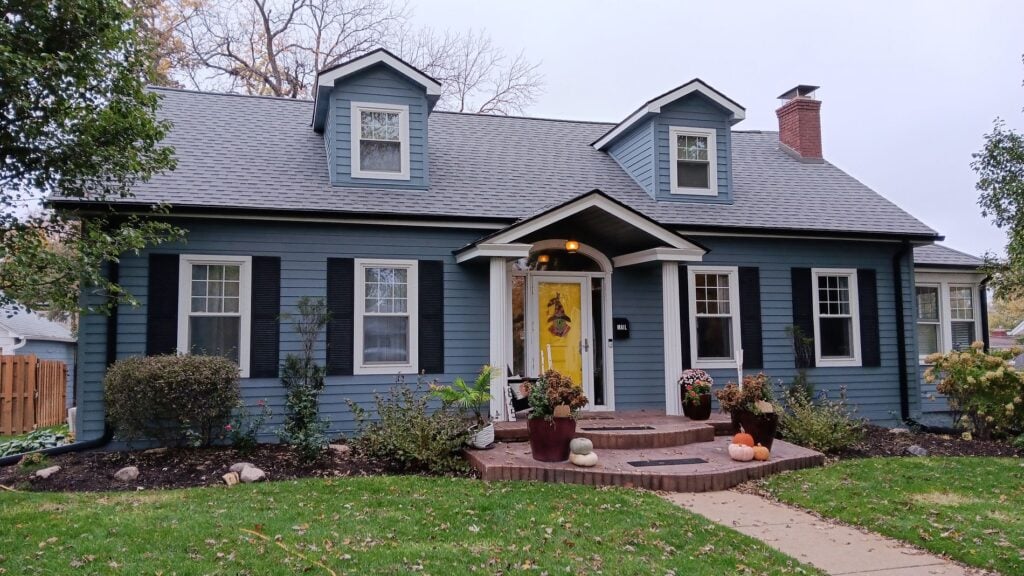
A new roof is a major expense that usually shows up when least expected. Storm damage forces the decision on a homeowner’s timeline. An aging roof starts leaking during a rainstorm. Either way, most families don’t have the full replacement cost sitting in savings. Financing turns a five-figure bill into a monthly payment that fits the household budget.
How Much Does a New Roof Actually Cost?
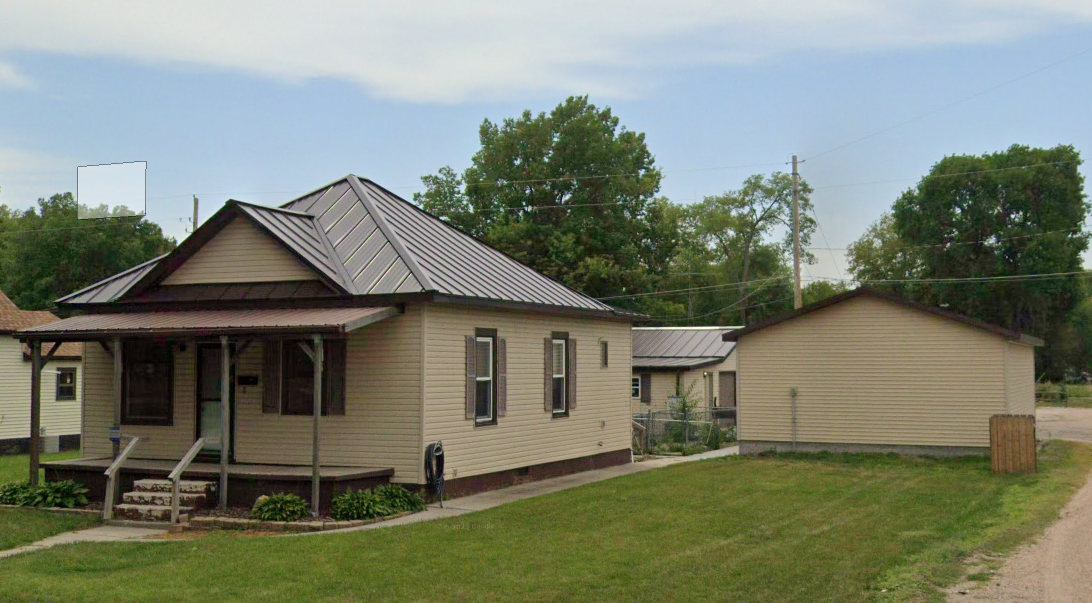
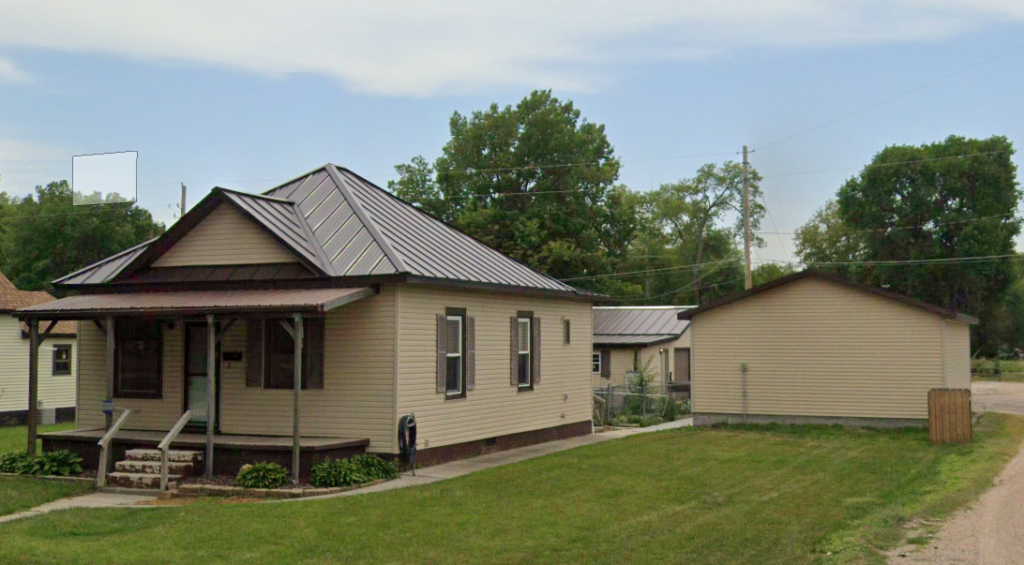
A typical asphalt shingle replacement on a 2,000-square-foot home runs about $9,000 to $18,000 in 2026. Steep pitches, complex rooflines, and premium materials like metal or standing seam push costs higher, sometimes past $30,000. Decking repairs add $50 to $100 per sheet of plywood if rot is discovered during tear-off. Tear-off itself adds $1,000 to $3,000. Knowing the full price before you apply for financing matters, because financing the wrong amount is a common mistake. Get a written quote from your contractor first, then match the loan to the actual number.
- Typical asphalt roof: $9,000 to $18,000 for a standard 2,000-square-foot home.
- Premium materials: Metal and standing seam can push past $30,000.
- Hidden costs: Decking repairs, tear-off, and code upgrades add to the total.
- Get the price first: Never apply for financing before you have a written quote.
6 Ways to Pay for a New Roof
Below is the numbered breakdown of the most common roof replacement financing options in 2026, with a look at what each one costs, how fast it funds, and when it makes sense.
1. Homeowner’s Insurance (If Damage Is Covered)
If your roof was damaged by a covered event like hail, wind, or a fallen tree, your homeowner’s insurance may pay for most or all of the replacement. This is always the first place to check before looking at any financing option. Insurance typically covers the full replacement cost minus your deductible when the damage is covered. Older roofs are increasingly settled on actual cash value instead of replacement cost, which pays the depreciated value rather than the cost to replace. Even a partial insurance payout can dramatically reduce the amount you need to finance. Start with an inspection, get a professional assessment, and file a claim before assuming you’ll pay the full cost.
- When it applies: Storm damage from covered perils like hail, wind, or fire.
- What it covers: Full replacement minus deductible, if you have RCV coverage.
- Actual cash value: Older roofs may only receive depreciated value.
- First step: Get a professional inspection before filing.
2. Cash or Savings
Paying cash is the simplest and cheapest option because there’s no interest to worry about. If you have the money set aside, or if you’re able to combine savings with a smaller loan, paying cash saves thousands over the life of a financed roof. The downside is that most homeowners don’t have $10,000 to $20,000 sitting around, and using an emergency fund to pay for a roof leaves you exposed to other unexpected expenses. Financial experts generally recommend keeping 3 to 6 months of living expenses in savings. If a full cash payment would drain that reserve, financing part or all of the roof is often the smarter move.
- Cheapest option: No interest, no fees, no application process.
- Fastest option: Pay the contractor directly on your own timeline.
- The catch: Draining an emergency fund creates other risks.
- Combined approach: Consider paying part in cash and financing the rest.
3. Contractor Financing
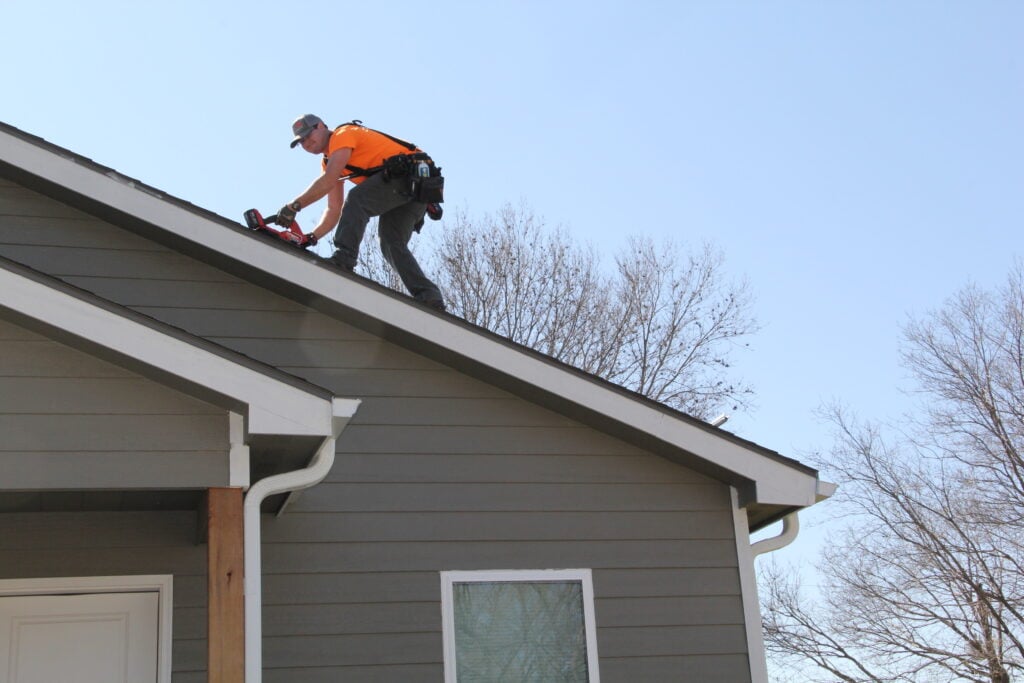
Many reputable roofing companies offer financing through lending partners, and this is often the fastest path from quote to install. Applications are usually quick, approval decisions come back in minutes, and the paperwork is handled alongside the roofing contract. Some contractors offer promotional periods with 0% APR for 12 to 18 months, which can make this the cheapest option if you can pay the balance in full before the promo ends. Watch out for deferred interest terms, where all the accrued interest gets added back if you don’t pay off the balance in time. Read the disclosure carefully. J-Tech, for example, offers financing options to fit any budget through vetted lending partners, which keeps the process simple and local.
- Fast approval: Often minutes, not days.
- Promotional rates: 0% APR periods are common for qualified borrowers.
- Watch for: Deferred interest that snaps back if not paid in time.
- Best fit: Homeowners who want simplicity and can pay off promo balances.
4. Personal Loans
A personal loan is an unsecured loan from a bank, credit union, or online lender. There’s no collateral involved, so your home isn’t at risk if you fall behind on payments. Personal loans typically fund in 1 to 3 days, which makes them a good fit when the roof is leaking and there’s no time to wait. Interest rates in 2026 generally run higher than home equity options because the loan isn’t secured, but they’re often lower than credit cards or contractor deferred-interest offers. Terms usually run 2 to 7 years. Credit score requirements vary but most lenders want at least 620 to 670 for competitive rates, with the best offers going to scores above 720.
- No collateral: Your home isn’t at risk if you can’t pay.
- Fast funding: Usually 1 to 3 days from approval to deposit.
- Fixed terms: Predictable monthly payments over 2 to 7 years.
- Credit matters: Best rates go to scores of 720 or higher.
5. Home Equity Loan or HELOC
If you have equity in your home, borrowing against it usually offers the lowest interest rates. A home equity loan gives you a lump sum at a fixed rate, while a home equity line of credit (HELOC) is a revolving credit line you can draw from as needed. According to the Consumer Financial Protection Bureau, both are treated as second mortgages that you’d need to pay in addition to your first mortgage. The trade-off is that your home serves as collateral, so falling behind could put your house at risk. Approval and funding typically take 2 to 6 weeks, which is too slow for an emergency but works well for planned replacements.
- Lowest rates: Secured by your home, so lenders charge less.
- Home equity loan: Fixed rate, lump sum, predictable payments.
- HELOC: Revolving credit, variable rate, flexible draws.
- Serious risk: Your home is collateral. Only borrow what you can safely repay.
6. Government and Utility Programs
A few government programs help homeowners finance roof replacement. The FHA Title I loan can fund up to $25,000 for home improvements including roofing. The FHA 203(k) loan and Fannie Mae HomeStyle loan can roll roof costs into a new mortgage during a home purchase or refinance. Rural homeowners may qualify for USDA repair loans and grants with low fixed rates for those who meet the income requirements. Some utility companies and state weatherization programs also offer low-interest loans or rebates for energy-efficient roofing upgrades like cool roofs or solar-integrated systems. These programs have specific eligibility rules but can offer far better terms than commercial loans for the right applicant.
- FHA Title I: Up to $25,000 for home improvement, including roofs.
- FHA 203(k) and HomeStyle: Roll roof costs into a purchase or refinance.
- USDA loans: Rural homeowners may qualify for low-rate repair loans.
- State and utility programs: Rebates and low-interest loans for efficient upgrades.
How Should You Choose the Right Financing?
The right option depends on how urgent the work is, how much equity you have, your credit profile, and how long you plan to stay in the home. There’s no single “best” answer, but a few rules of thumb help narrow the choice.
What Questions Should You Ask Before Signing?
Ask about the total cost of the loan, not just the monthly payment. A low monthly payment on a 10-year loan often means thousands more in total interest than a shorter term. Ask whether the interest rate is fixed or variable, whether there are origination fees or prepayment penalties, and what happens if you miss a payment. For promotional offers, read the fine print carefully to understand whether interest is waived or deferred. Compare at least two or three offers before choosing. And always match the loan amount to a firm written quote from your contractor, not an early estimate.
- Total cost: Look at total interest, not just monthly payment.
- Rate structure: Know whether the rate is fixed or variable.
- Fees and penalties: Origination fees and prepayment penalties add up.
- Compare offers: Get at least two or three before signing.
Frequently Asked Questions
What credit score do I need to finance a new roof?
Most personal loan lenders want at least 620 to 670 for approval, with the best rates going to scores of 720 or higher. HELOC and home equity loan lenders usually want at least 620 to 680. Contractor financing may approve lower scores at higher rates.
Can I finance a new roof with no money down?
Yes. Most personal loans, contractor financing, and home equity options don’t require a down payment. Just make sure the monthly payment fits your budget comfortably before signing.
Is roof financing interest tax deductible?
Interest on home equity loans and HELOCs may be tax deductible if the funds are used to “buy, build, or substantially improve” the home. Personal loan interest is generally not deductible. Consult a tax professional for your specific situation.
How long does it take to get approved for roof financing?
Contractor financing and personal loans typically fund in 1 to 3 days. HELOCs and home equity loans usually take 2 to 6 weeks due to appraisal and closing requirements. Insurance claims can take a few weeks to a few months.
What if my insurance covers part of the roof but not all of it?
Finance the difference. If insurance pays $8,000 on a $15,000 roof, a personal loan or contractor financing can cover the remaining $7,000. Never delay repairs while waiting to finance the gap, since water damage from a compromised roof grows fast.
Should I use a credit card to pay for a new roof?
Only if the card has a true 0% intro APR and you can pay the balance in full before the promo ends. Regular credit card interest rates are among the highest of any financing option and can add thousands to the total cost.
Why Choose J-Tech Construction & Solar for Your Roof Replacement?
J-Tech Construction & Solar is the trusted name for roof replacement in Gretna and surrounding areas because of more than 20 years of construction experience, a family-owned and locally operated team, and financing options that fit any budget. Every roof replacement starts with a free in-home assessment, transparent written quotes, quick turnaround times, and warranties on both materials and labor. J-Tech is a GAF Master Elite contractor, James Hardie Preferred, BBB Accredited, and OSHA Certified, backed by an in-house customer service team that keeps you informed every step of the way. Whether you’re paying with insurance, financing through a lending partner, or combining a few options, the J-Tech team will walk you through the numbers before you commit. Contact J-Tech Construction & Solar today to schedule your free roof estimate and find out exactly what your new roof will cost.