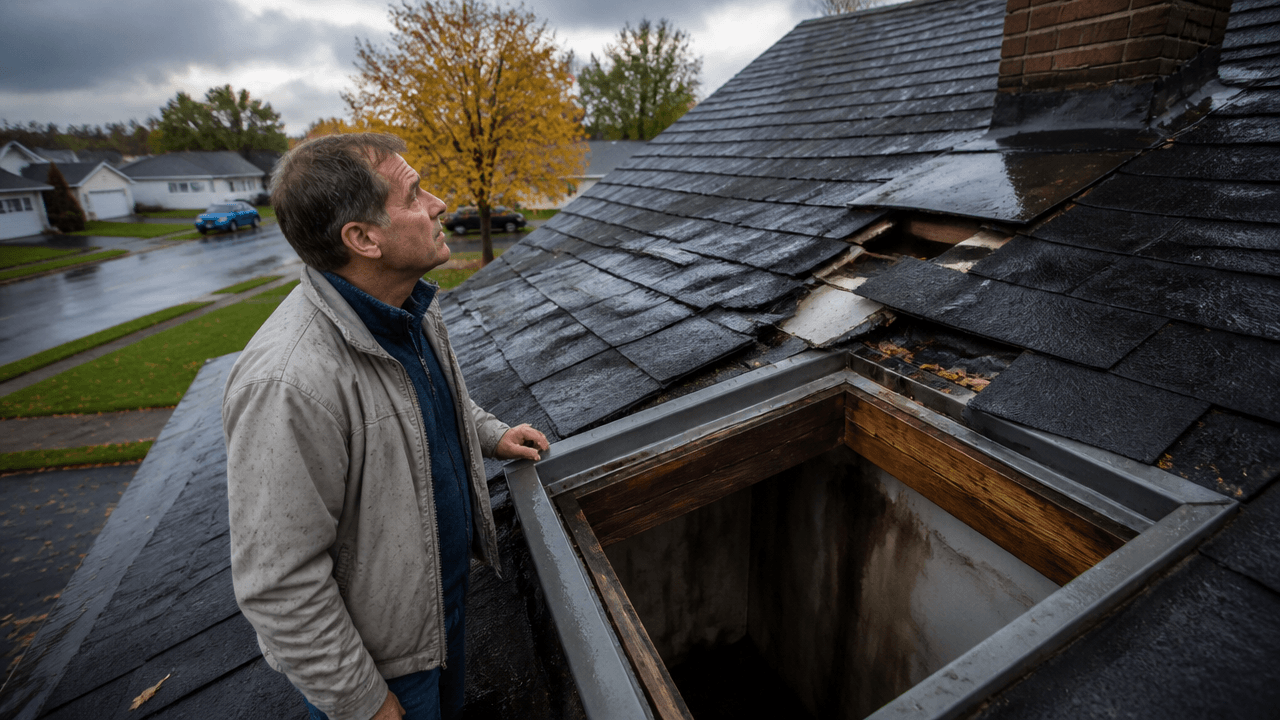
• Heavy rain can expose roof weak spots fast, especially around shingles, flashing, gutters, and roof openings. Knowing what causes roof leaks after heavy rain helps homeowners act early and prevent bigger damage.
• A simple checklist can help you spot warning signs like ceiling stains, attic moisture, and blocked drainage before the problem spreads. Quick checks make it easier to protect your home during Crete’s rainy autumn weather.
• If leaks keep coming back, the issue may need a closer roof inspection from a trusted professional. Fast action can help reduce repair costs and keep your home dry and secure.
Know the Main Reasons Roof Leaks Start After Heavy Rain
The goal is to help homeowners figure out what causes roof leaks after heavy rain so they can act fast and limit damage. A quick check after a storm can reveal small issues before they turn into bigger repairs.
Heavy rain can push water into weak spots like cracked shingles, worn flashing, or clogged gutters. If you need help with a deeper look, roofing services can identify problem areas before the next storm hits.
Spotting the cause early makes it easier to protect your home during Crete’s autumn rain season. That means less stress, less water damage, and a better plan for keeping your roof ready for the weather ahead.

Roof Leak Checklist After Heavy Rain
Use this checklist to take fast, smart action when you are trying to figure out what causes roof leaks after heavy rain. A simple review can help you catch signs of water entry before the damage spreads inside your home.
- ✅ Look for water stains on ceilings and upper walls
- ✅ Check the attic for damp spots or dripping water
- ✅ Inspect shingles for cracks, curling, or missing pieces
- ✅ Make sure flashing around vents and chimneys is secure
- ✅ Clear gutters and downspouts of leaves and debris
- ✅ Watch for pooling water near weak roof areas
- ✅ Check for damaged seals around roof openings
- ✅ Schedule a roof inspection if leaks keep coming back
These simple checks can help you spot trouble early and keep storm damage from getting worse. If you notice repeated leaks, the problem may be deeper than the surface and need a closer look.
Taking action right away can protect your home, save money, and reduce stress after a heavy rain. When in doubt, it is always smart to call a roofing professional before the next storm moves in.
Additional Advice
After heavy rain, do not just patch the wet spot and move on. The real fix starts with finding the source, since water can travel along rafters and show up far from the actual entry point.
Many homeowners miss small issues like loose flashing, aging sealant, or clogged drainage paths. These details can make a big difference, especially in Crete during the autumn season when rain can keep coming back.
If leaks keep showing up, it is a good idea to get help from a trusted local team like roofing specialists. A careful roof check can reveal damage that is easy to miss from the ground.
It also helps to stay ahead of the next storm instead of waiting for another ceiling stain. Regular roof care, fast repairs, and watching for early warning signs can go a long way in keeping your home dry and safe.
Frequently Asked Questions
What causes roof leaks after heavy rain?
Roof leaks after heavy rain are often caused by damaged shingles, weak flashing, clogged gutters, or worn sealant around roof openings. Water can slip into these weak spots and show up inside as stains, drips, or damp ceilings.
How do I know if a roof leak is serious?
A roof leak is serious if water keeps returning, spreads quickly, or causes ceiling damage, mold, or a damp attic. Even a small leak can turn into a larger repair if it is ignored after the first sign of water.
Can clogged gutters cause roof leaks?
Yes, clogged gutters can cause roof leaks by stopping water from draining away from the roof edge. When water backs up, it can seep under shingles and into the home.
Should I check the attic after heavy rain?
Yes, checking the attic after heavy rain is one of the best ways to spot a leak early. Look for wet insulation, stains on wood, or active dripping so you can respond before the damage grows.
When should I call a roofing professional?
You should call a roofing professional if the leak keeps coming back, if you cannot find the source, or if the damage looks larger than a simple patch job. A trained roofer can identify the real cause of the leak and recommend the right fix.
Final Thoughts on Roof Leaks After Heavy Rain
Knowing how to spot roof trouble after a storm can save you time, money, and a lot of stress. The key is to act early, look for warning signs, and take each leak seriously even if it seems small at first.
In Crete’s autumn weather, staying on top of roof care matters because repeated rain can expose weak spots fast. For more updates and project highlights, follow us on social media.