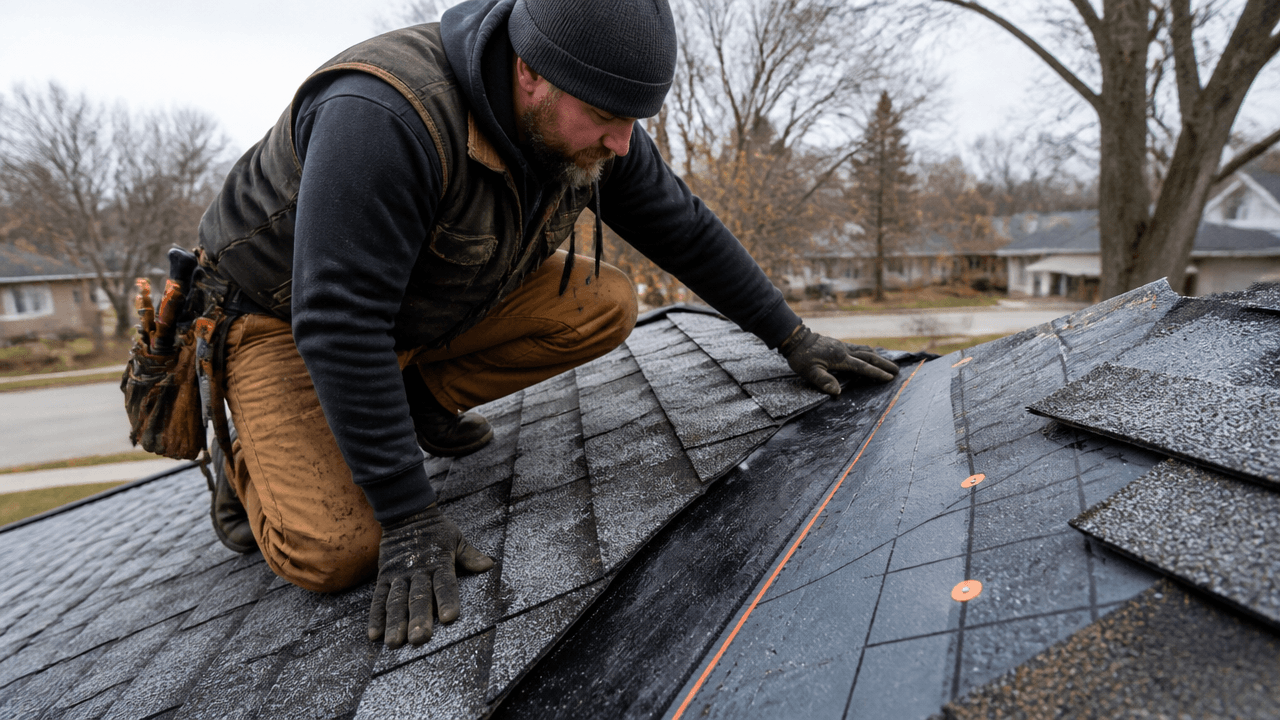
• Ice and water shield helps protect roof areas where leaks are most likely to start, especially in valleys, edges, and other exposed spots.
• Fall is the right time to check for weak shingles, flashing issues, and past moisture signs before colder weather makes roof problems worse.
• A roof with the right protection can lower the chance of leaks, reduce damage, and help homeowners get ready for winter with more confidence.
Why Fall Roof Prep Matters
November weather in Lincoln can shift fast, and that makes roof protection feel urgent. Cold nights, damp days, and early freeze cycles can put real pressure on weak spots before winter settles in. One small gap can turn into a bigger problem when moisture gets under the surface.
That is why ice and water shield matters so much in the fall. It gives the roof an extra layer of defense where leaks are most likely to start. We often remind homeowners that waiting until the first hard freeze can make repairs harder and more costly.
If your roof already has worn shingles, loose edges, or past leak issues, this is the time to act. A roof that looks fine from the ground can still have trouble spots that let water in during storms. When moisture finds a path inside, it can lead to stains, damage, and repair work that could have been avoided.
How Roof Protection Works
An ice and water shield is a sticky, sealed layer that helps block water in areas where roof leaks are most common. It is often used along the edges, valleys, and other places that see more moisture stress. For homeowners in Lincoln, that added protection can make a big difference when fall weather turns colder and wetter.
We also know that roof care is not just about one product, but about the full system working together. If shingles, flashing, or underlayment are already worn, water can still slip through the roof over time. That is why a proper check before winter can help protect both the roof deck and the home below, especially when paired with services like our roofing services.
Tips from the Pros
🔎 Tip 1: Check the roof before the first freeze
Late fall is a smart time to inspect for loose shingles, weak flashing, and soft spots. Cold weather can make small roof issues harder to fix later, so early action matters.
🌧️ Tip 2: Pay close attention to roof valleys
Valleys handle a lot of runoff, which makes them a common leak area. We often see water problems start there when a roof does not have enough protection.
🧊 Tip 3: Look for signs of past moisture trouble
Water stains, peeling paint, and damp attic spots can point to roof weakness. These warning signs can mean the roof needs more than a quick patch.
🛠️ Tip 4: Make sure flashing is in good shape
Flashing helps seal joints where water likes to sneak in. If it is bent, rusted, or loose, the roof may be more vulnerable during freeze and thaw cycles.
📋 Tip 5: Ask about coverage near the edges
Roof edges often take the most weather stress during storms and snowmelt. A well-placed ice and water shield can help guard these exposed areas better than shingles alone.
🏠 Tip 6: Do not wait for a leak to get help
By the time water shows inside, the roof problem may already be larger than it looks. Early roof work can help protect insulation, ceilings, and framing from extra damage.
❄️ Tip 7: Think about freeze and thaw patterns
In Lincoln, late fall weather can move back and forth between cold and mild days. That cycle can push moisture into weak roof spots and make existing problems worse.
🔧 Tip 8: Choose the right layer for the job
Not every roofing area needs the same level of protection, but key spots do need extra care. Ice and water shield is designed to help in those high-risk areas where leaks often start.
Frequently Asked Questions
What is ice and water shield used for?
Ice and water shield is used to help stop water from getting into the roof in weak spots. It is especially helpful in areas where ice, snow, or heavy rain can create leak risks.
Where is ice and water shield usually installed?
It is usually installed in roof valleys, along eaves, and around other areas that face extra moisture. These are the spots where water is most likely to collect or move under roofing materials.
Do I need ice and water shield in fall?
Yes, fall is a smart time to make sure the roof is ready for colder weather. In Lincoln, November can bring early freeze conditions that make roof protection more important.
Can ice and water shield help prevent roof leaks?
Yes, it can help reduce leak risk by adding a sealed barrier in problem areas. It is not a fix for every roof issue, but it gives the roof extra defense where leaks often begin.
How do I know if my roof needs more protection?
A roof may need more protection if it has older shingles, past leak spots, or worn flashing. Signs of water stains or damp attic areas can also point to trouble that should be checked soon.
Protect Your Roof Before Winter
Fall is the right time to take roof protection seriously, especially when colder weather is close and moisture can reach weak spots fast. A well-placed ice and water shield can help lower the chance of leaks and give your home a stronger defense heading into winter.
We believe roof care should feel clear and timely, not stressful or confusing. If you want to stay connected with our team and see more from our work in Lincoln, follow us on social media.