
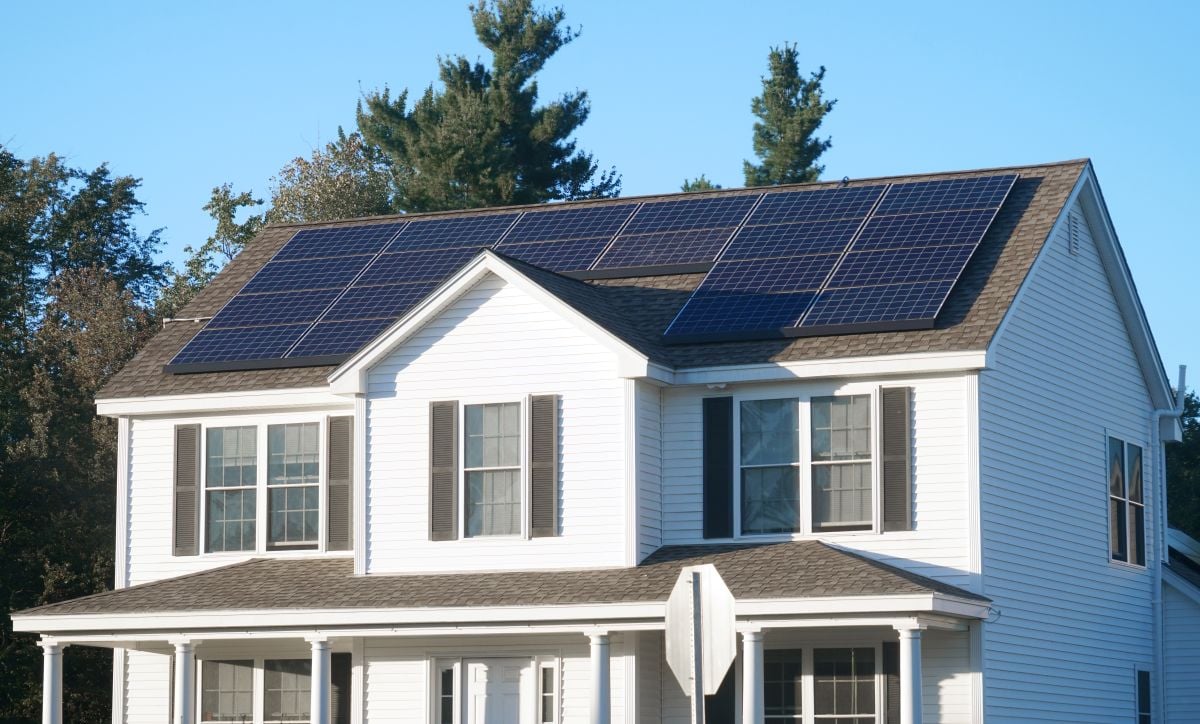
The honest answer to “how many solar panels do I need” is between 15 and 25 panels for most homes in Kearney and surrounding areas, but the right number for your home depends on five specific factors that installers use to size every system. Online calculators and rule-of-thumb estimates ignore the details that actually matter, like your real annual usage, your roof’s sun exposure, and how efficient the panels you choose actually are. Sizing the system right matters because oversizing wastes money and undersizing leaves you paying utility bills for years to come. This guide walks through the five factors every installer uses, with real math and clear examples.
- The five sizing factors: Annual usage, panel wattage, sun exposure, roof characteristics, and offset goals.
- Real-world math: A simple formula and worked examples to estimate your system size.
- Common pitfalls: Where homeowners over- or undersize their system and how to avoid both.
Why Does Solar System Sizing Matter?
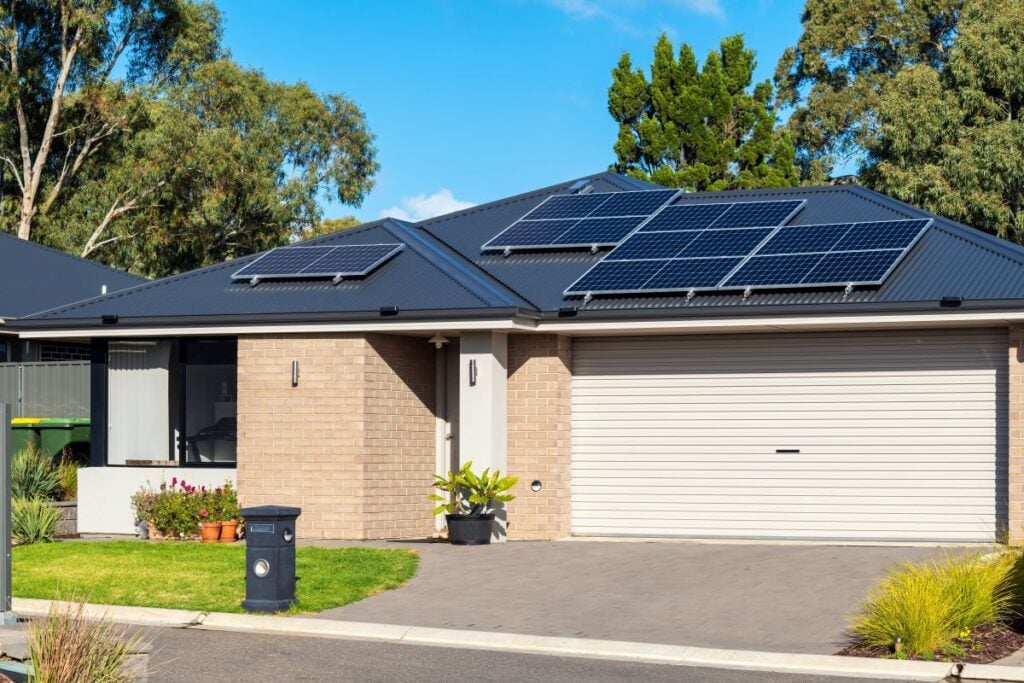
Sizing is the foundation of every solar quote because it determines panel count, system cost, roof area required, and how much of your utility bill you’ll actually offset. A system sized too small leaves money on the table; one sized too large costs more than necessary and may exceed utility net-metering limits.
What Goes Wrong with the Wrong Size?
A 6 kilowatt system in a 12,000 kWh-per-year household leaves roughly 30% of usage unaddressed, while a 12 kilowatt system on a 7,000 kWh household overproduces by nearly 40% and may exceed the 120% interconnection cap most utilities enforce. The financial consequences are real on both sides. Undersized systems still leave you with utility bills that can total $1,000 to $2,000 per year, which is the savings you came to solar to capture in the first place. Oversized systems bring higher upfront cost without proportional benefit, since most utilities don’t pay retail rates for excess power exported to the grid. Getting the sizing right within 5% to 10% is what separates a quality installer from one who’s just selling panels.
- Undersized risk: Continuing utility bills of $1,000 to $2,000 per year.
- Oversized risk: Higher upfront cost without proportional savings.
- Utility caps: Most utilities limit systems to 120% of recent annual usage.
- Sweet spot: Sizing within 5% to 10% of true annual demand.
5 Factors That Determine System Size
Below is a numbered breakdown of the five factors every solar installer uses to size a residential system. Each one moves the panel count meaningfully, and getting any of them wrong throws the whole estimate off.
1. Annual Electricity Usage
Your annual usage in kilowatt-hours is the starting point for every solar quote, and it comes straight from your utility bills. According to data from the U.S. Energy Information Administration, the average American household used 10,260 kWh of electricity in 2023. Most homeowners in Kearney and surrounding areas land between 9,000 and 14,000 kWh per year depending on home size, occupancy, heating type, and whether an electric vehicle is in the picture. The single most important step in sizing is pulling 12 months of utility bills to capture seasonal variation, since summer AC and winter heating loads can swing monthly usage by 50% or more. Anyone giving you a quote without seeing real usage data is guessing.
- National average: 10,260 kWh per year per home (EIA 2023 data).
- Typical range: 9,000 to 14,000 kWh annually for most households.
- Data source: Pull 12 months of utility bills for accurate sizing.
- Future loads: Add 3,000 to 4,000 kWh if planning an EV purchase.
2. Solar Panel Wattage
Panel wattage directly determines how many panels you need, with most 2026 residential panels falling between 380 and 440 watts. A 10 kilowatt system using 400-watt panels needs 25 panels, while the same system using 440-watt premium panels needs only 23. Higher-wattage panels cost more per unit but reduce panel count, which can matter on smaller or shaded roofs where every square foot counts. Premium options like the Maxeon 7 hit 440 to 500 watts per panel at 24% efficiency, while mid-range panels from Qcells and Canadian Solar typically run 400 to 425 watts at 21% to 22.5% efficiency. The right call depends on whether your roof has plenty of space or is the constraint.
- Standard panels: 380 to 420 watts at 20% to 22% efficiency.
- Premium panels: 430 to 500 watts at 22% to 24% efficiency.
- Roof impact: Higher-wattage panels require less roof area.
- Cost trade-off: Premium panels add 15% to 30% to system cost.
3. Peak Sun Hours and Production Ratio
Peak sun hours measure how much usable sunlight your location gets per day, and Nebraska averages 4.5 to 5 peak sun hours, which puts the state in the middle of the U.S. range. That translates to a production ratio of roughly 1.3 to 1.4, meaning a 10 kilowatt system produces 13,000 to 14,000 kWh per year. Arizona homeowners get 6 to 6.5 peak sun hours and ratios above 1.6, while Massachusetts and Pacific Northwest homeowners see 3.7 to 4.2 hours and ratios closer to 1.1. The same household uses more panels in Massachusetts than Arizona for identical annual production. Local installers use NREL’s PVWatts Calculator to pull location-specific production estimates that account for actual weather patterns.
- Nebraska peak sun hours: 4.5 to 5 per day, mid-range nationally.
- Production ratio: 1.3 to 1.4 for most Kearney installations.
- Tool used: NREL PVWatts Calculator pulls location-specific data.
- Regional impact: Sunnier states need fewer panels for the same output.
4. Roof Orientation, Pitch, and Shading
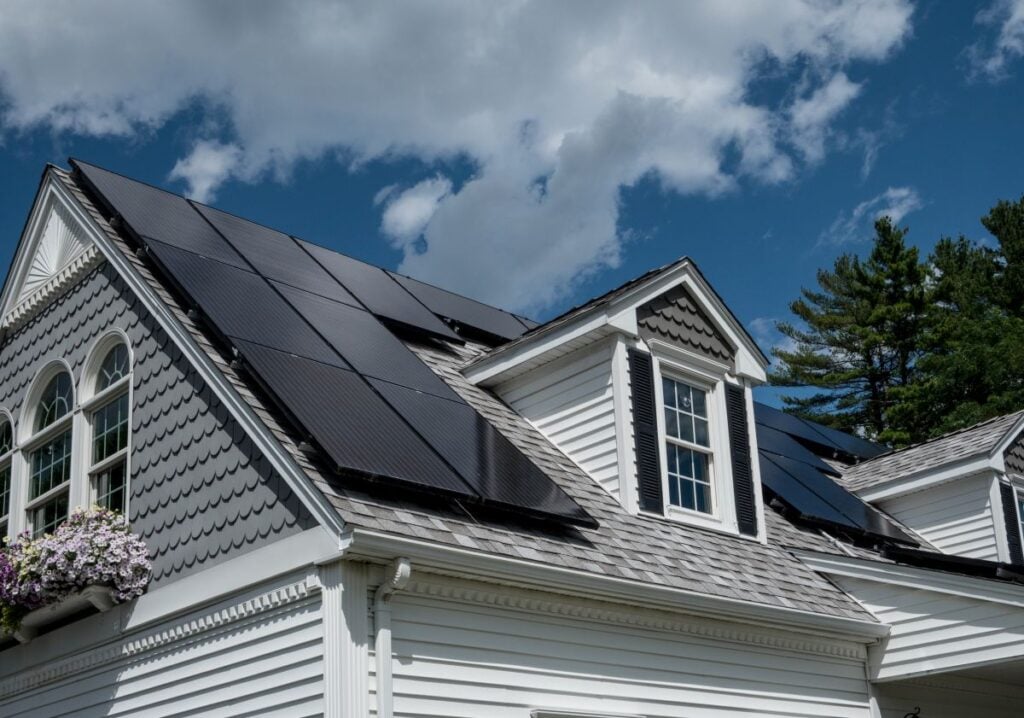
A south-facing roof at 30 to 45 degrees pitch is the gold standard for solar production, but east- and west-facing roofs only lose 10% to 20% of output. North-facing roofs are typically poor candidates and may need 30% to 50% more panels to compensate. Shading is more punishing than orientation in most cases, since even partial shade on one panel can reduce its output dramatically without microinverters or power optimizers. Trees, chimneys, neighboring buildings, and rooftop equipment all factor in. Most installers use shading analysis tools like Aurora or HelioScope to model your specific roof rather than guessing. Roof material and age also matter, since asphalt shingles older than 10 to 15 years should typically be replaced before solar goes on top.
- South-facing optimal: Maximum production at 30 to 45 degree pitch.
- East/west roofs: 10% to 20% production reduction; usually still worth it.
- Shading impact: Even partial shade significantly reduces panel output.
- Roof age: Replace shingles older than 10 to 15 years before installing.
5. Coverage Goal and Future Electrification
Most homeowners target 100% offset of current usage, but the right target depends on your future plans. If you’re planning to add an electric vehicle, electric heat pump, or expand your home, sizing for 120% to 150% of current usage avoids paying twice for installation. An EV adds roughly 3,000 to 4,000 kWh per year to a typical household, while switching from natural gas to a heat pump can add 5,000 to 8,000 kWh. Most utilities allow grid-connected systems up to 120% of the prior 12 months of usage, which gives some headroom for growth without requiring a separate interconnection application. Be aware that with the federal Section 25D Residential Clean Energy Credit ending December 31, 2025, oversizing for unused capacity is a tougher financial call in 2026 than it was in 2024.
- Standard target: 100% offset of current annual usage.
- EV upgrade: Plan for an extra 3,000 to 4,000 kWh per year.
- Heat pump upgrade: Plan for an extra 5,000 to 8,000 kWh per year.
- Utility cap: Most allow up to 120% of recent 12-month usage.
How Do You Calculate Panel Count?
The simple formula is annual usage divided by production ratio divided by panel wattage. The math is quick once you have the inputs.
What’s the Formula and a Real Example?
The formula works like this: 10,500 kWh annual usage divided by a 1.4 production ratio divided by 400 watts per panel equals 18.75, rounded up to 19 panels. That sizes a roughly 7.6 kilowatt system, which is typical for an average Nebraska home. A 12,000 kWh household with the same panel and ratio needs 22 panels and a 8.8 kilowatt system. A 9,000 kWh household needs 17 panels and a 6.8 kilowatt system. Plug your own annual usage into the same formula to get a starting estimate before any installer visits. The number you get from this math will land within 10% of what a quality installer quotes, assuming standard roof conditions and 400-watt panels.
- Average home: 19 panels for 10,500 kWh per year.
- Larger home: 22 panels for 12,000 kWh per year.
- Smaller home: 17 panels for 9,000 kWh per year.
- Validation: Real installer quote should land within 10% of the formula.
Frequently Asked Questions
How many solar panels does a 2,000-square-foot home need?
A typical 2,000-square-foot home uses 10,000 to 12,000 kWh per year and needs 18 to 22 solar panels at 400 watts each. The exact count depends on insulation, occupancy, heating type, and appliance efficiency rather than square footage alone. Pulling 12 months of bills gives a far more accurate number than home size estimates.
How much roof space do solar panels need?
Each 400-watt residential solar panel takes about 21 square feet of roof area, so a typical 19-panel system needs roughly 400 square feet of unshaded roof space. Premium high-wattage panels reduce that footprint by 10% to 20% by producing more per panel.
Do solar panels work in cloudy weather?
Yes, solar panels still produce 10% to 25% of rated output on cloudy days, and modern HJT and TOPCon panels handle diffused light well. Annual production estimates already account for typical cloud cover in your region.
Can I add panels to an existing solar system later?
You can add panels later, but the costs are higher per panel than the original installation because you’ll pay separately for permitting, inspection, and another truck roll. If you’re planning an EV or heat pump within 3 to 5 years, sizing the original system larger upfront is almost always cheaper.
Is it better to oversize or undersize a solar system?
Sizing within 5% to 10% of actual annual usage is the goal. Slight oversizing (10% to 20%) is usually better than undersizing because utility rate increases benefit larger systems and future electrification is becoming more common. Most utilities cap systems at 120% of recent 12-month usage.
How long does sizing and installation take?
Solar sizing is usually completed during the initial consultation in 30 to 60 minutes once utility bills are reviewed. Full installation timeline from contract signing to system activation runs 2 to 4 months, with most of the wait coming from utility interconnection approvals.
Why Choose J-Tech Construction & Solar for Your Solar Installation?
J-Tech Construction & Solar is the trusted name for residential solar in Kearney and surrounding areas because of more than 20 years of construction and solar experience, a family-owned and locally operated team, and a proven approach to accurate system sizing that protects your investment from day one. Every consultation includes a free in-home assessment, a transparent written quote with system size and panel count clearly explained, quick turnaround times, financing options for any budget, and warranties backed by both the manufacturer and J-Tech’s workmanship. Whether you’re sizing a system for current usage, planning ahead for an EV or heat pump, or just want an honest second opinion on a quote you’ve received, the J-Tech team gets the math right. Contact J-Tech Construction & Solar today to schedule your free solar estimate and find out exactly how many panels your home actually needs.