
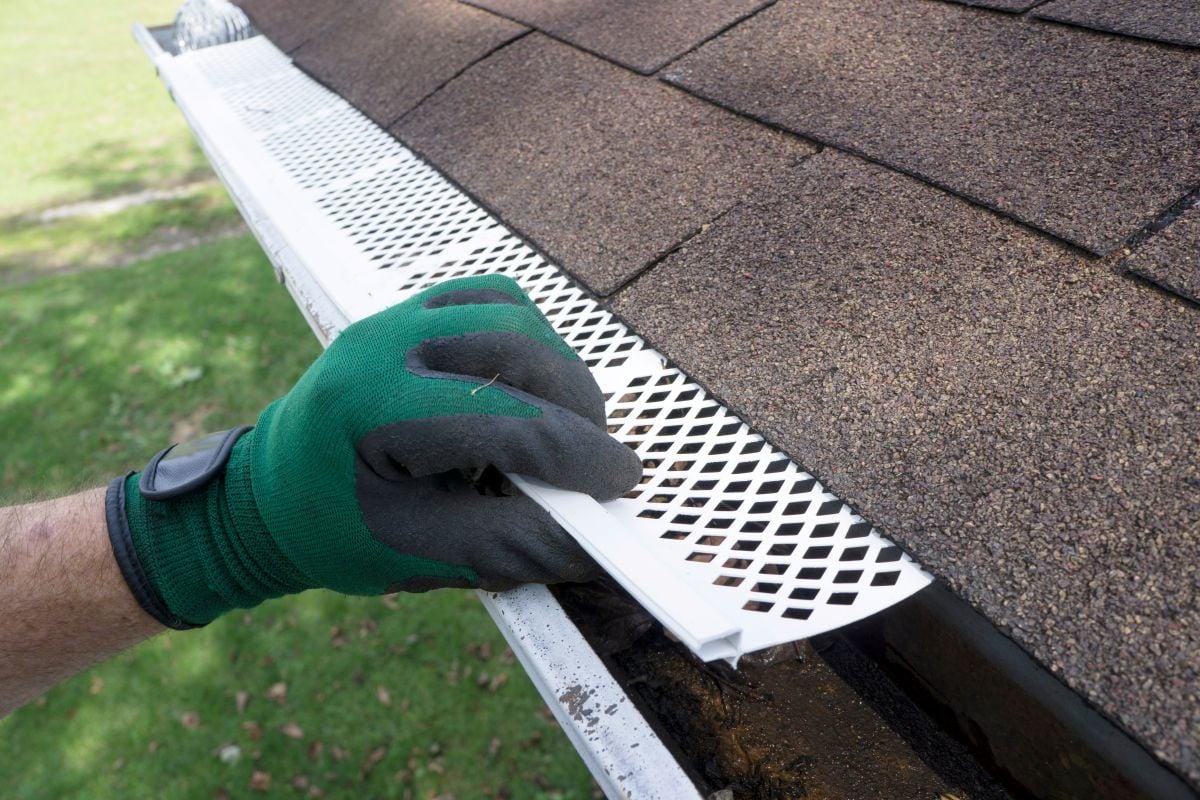
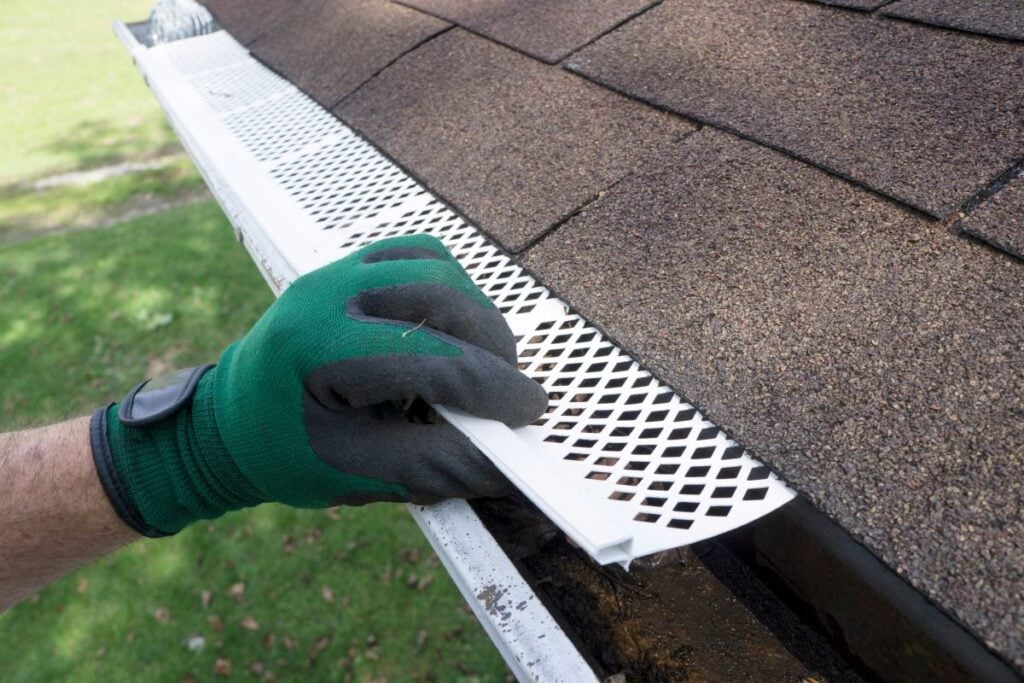
Most homeowners think about gutter guard installation only after a clogged downspout sends water cascading down the side of the house, but the real benefits go far beyond keeping leaves out. Quality gutter guards in Papillion and surrounding areas typically run $7 to $15 per linear foot installed, and they pay back through fewer cleanings, reduced foundation damage, and protection against pests and ice dams. The decision isn’t just about convenience; it’s about protecting the larger systems gutters connect to, including your roof, siding, foundation, and landscaping. This guide walks through the six benefits most homeowners don’t see coming until after the guards are in.
- Real protection scope: What gutter guards actually defend beyond just clog prevention.
- Cost and ROI: What gutter guards cost installed and how the savings compound.
- Type comparison: Which guard styles work best for which roofs and tree conditions.
What Are Gutter Guards and How Do They Work?
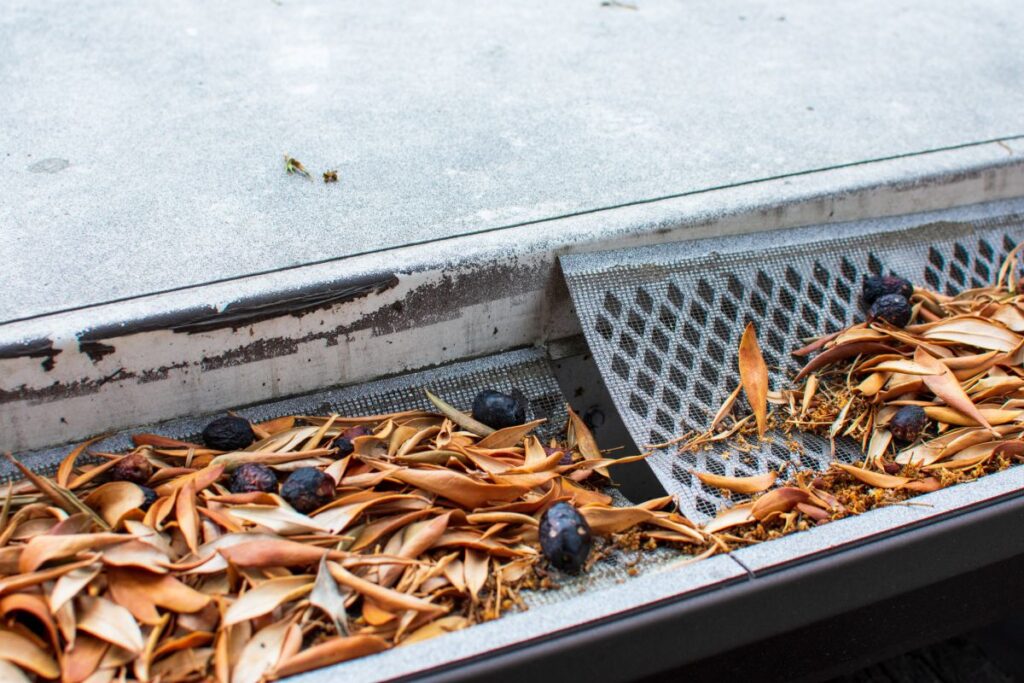
Gutter guards are protective covers installed over gutters that allow water through while blocking leaves, twigs, pine needles, and debris from accumulating inside. They come in several styles, and the right choice depends on your tree cover, roof slope, and budget.
What Are the Main Types of Gutter Guards?
The five main gutter guard types are mesh screens, micro-mesh, reverse-curve, foam inserts, and brush guards, each with distinct strengths and weaknesses. Mesh and micro-mesh guards use fine stainless steel or aluminum screening and handle small debris like pine needles and shingle grit best. Reverse-curve guards use surface tension to direct water around a curved nose into the gutter while leaves slide off, working well in heavy-leaf environments but struggling on steep roofs. Foam and brush inserts are the budget-friendly options that drop into existing gutters but require more frequent cleaning than other types. Premium micro-mesh systems carry warranties up to lifetime transferable coverage.
- Micro-mesh: Best for fine debris and pine needles; $9 to $15 per foot.
- Reverse-curve: Best for heavy leaf cover; $10 to $20 per foot.
- Mesh screen: Mid-range option; $4 to $10 per foot.
- Foam or brush: Budget options; $2 to $5 per foot.
6 Benefits Homeowners Don’t Expect
Below is the numbered breakdown of the six benefits most homeowners discover only after gutter guards are installed. Each one matters in different ways, and stacked together they explain why the upfront cost is usually justified.
1. Fewer Trips Up a Ladder (And Real Safety Wins)
Gutter guards dramatically reduce how often you need to climb a ladder, which addresses a serious home injury risk. According to the CDC’s National Institute for Occupational Safety and Health, there were 161 workplace ladder fatalities and 22,710 ladder-related workplace injuries in 2020 alone, and many ladder injuries also occur at home during routine maintenance like gutter cleaning. Without guards, most homes need gutters cleaned twice a year, with two-story homes pushing each cleaning to a 20-foot extension ladder. Quality micro-mesh guards reduce that frequency to once every 3 to 5 years for a quick rinse, removing dozens of ladder trips over the life of the guard. For older homeowners or anyone uncomfortable on a ladder, that’s the single most valuable benefit on this list.
- Standard cleaning frequency: Twice per year without guards.
- With quality guards: Roughly once every 3 to 5 years.
- CDC ladder data: Thousands of ladder injuries annually nationwide.
- Risk reduction: Particularly meaningful for older homeowners.
2. Foundation and Basement Protection
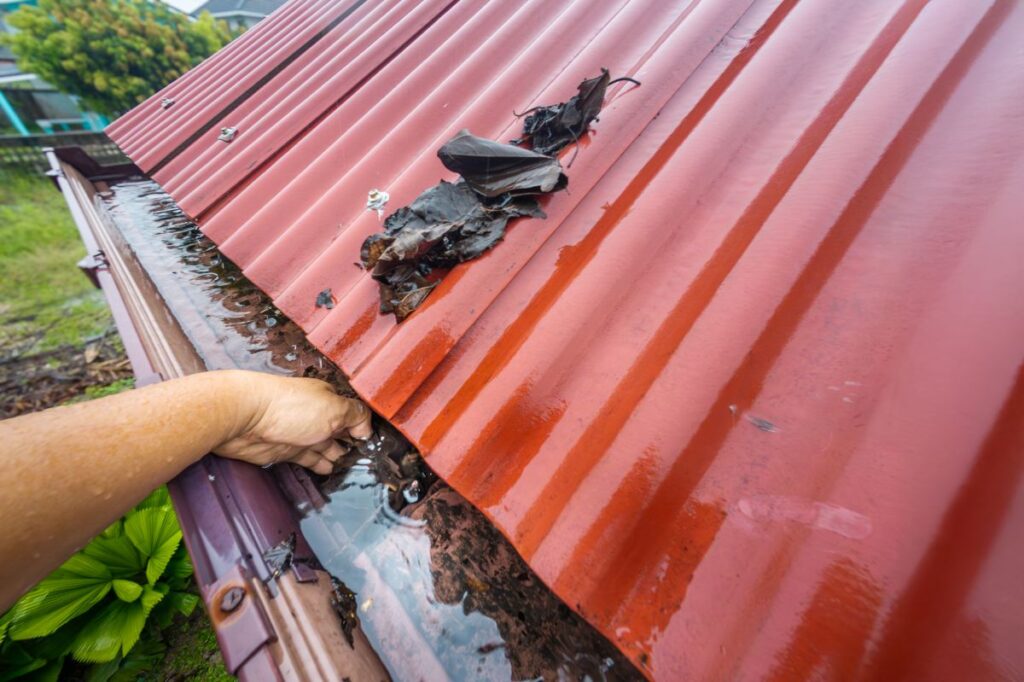
Clogged gutters dump water at the base of your home rather than directing it through downspouts away from the foundation. That overflow saturates the soil around the footings, which leads to hydrostatic pressure cracking the foundation, basement leaks, and shifted footings over time. Foundation repair costs typically range from $4,500 to $25,000 depending on the severity, dwarfing the cost of gutter guards. In Papillion and surrounding areas where freeze-thaw cycles add seasonal stress, persistent overflow can crack foundations within just a few years. Gutter guards keep gutters flowing as designed, sending water through downspouts and away from the foundation where it belongs. This is the single most expensive risk gutter guards mitigate.
- Foundation repair cost: $4,500 to $25,000 depending on damage.
- Damage mechanism: Clogged gutters overflow at foundation perimeter.
- Climate factor: Freeze-thaw cycles accelerate foundation cracking.
- Prevention value: Far cheaper than the foundation repairs they prevent.
3. Roof and Fascia Damage Prevention
Water trapped in clogged gutters backs up under shingles and saturates the wooden fascia board behind the gutter. That moisture rots the fascia, peels paint, and eventually penetrates the roof deck, leading to repairs ranging from $300 to $5,000. Ice dams form in winter when clogged gutters trap melting snow that refreezes at the eave, prying shingles loose and forcing water under the roofing system. Repairing ice dam damage can run $4,000 to $10,000 once interior ceilings and insulation are involved. Gutter guards keep water flowing freely, which prevents both the slow rot from standing water and the sudden ice dam damage that comes with Nebraska winters.
- Fascia repair cost: $300 to $5,000 depending on rot extent.
- Ice dam repair cost: $4,000 to $10,000 with interior damage.
- Damage mechanism: Standing water in clogged gutters.
- Prevention scope: Fascia, soffits, roof deck, and shingles.
4. Pest and Wildlife Deterrent
Open gutters filled with wet leaves are prime habitat for mosquitoes, carpenter ants, termites, wasps, and rodents looking for nesting spots near the roofline. Mosquitoes can breed in as little as a quarter-inch of standing water, and clogged gutters easily hold that and far more. Birds, squirrels, and chipmunks build nests in debris-filled gutters, sometimes leading to entry points into attics through damaged soffits. Gutter guards eliminate the standing water and nesting material that draw these pests in the first place. For homeowners dealing with persistent insect or rodent issues near the roofline, gutter guards often resolve a problem they didn’t know was tied to the gutters.
- Mosquito breeding: Can occur in just a quarter-inch of standing water.
- Insect risk: Wasps, carpenter ants, and termites attracted to wet debris.
- Rodent risk: Birds, squirrels, and chipmunks nest in clogged gutters.
- Solution: Guards eliminate both standing water and nesting material.
5. Extended Gutter Lifespan
Gutters typically last 20 to 30 years, but clogged gutters fail in half that time because the constant weight of wet debris bends and pulls gutters away from the fascia. Standing water also accelerates corrosion on aluminum gutters and rots the wood behind them. Replacement gutters cost $4 to $30 per linear foot installed, putting full-house replacement at $1,500 to $8,000 or more. Gutter guards keep gutters flowing freely and dry between rains, which roughly doubles their effective lifespan in many cases. The upfront cost of guards is typically 50% to 80% of new gutters, so they often pay for themselves through extended gutter life alone.
- Gutter lifespan with guards: Often 25 to 30+ years.
- Without guards: Typically 10 to 15 years before replacement needed.
- Replacement cost: $1,500 to $8,000+ for a full house.
- Failure mechanism: Debris weight and standing water corrosion.
6. Lower Long-Term Maintenance Costs
The cumulative savings from gutter guards add up faster than most homeowners realize. Professional gutter cleaning costs $150 to $400 per visit twice a year, totaling $300 to $800 annually. Over 20 years, that’s $6,000 to $16,000 in cleaning fees alone, not counting the foundation, roof, and gutter repairs that clogged gutters cause. Quality gutter guards cost $1,500 to $4,500 installed on a typical home, which most homeowners recover within 5 to 10 years through cleaning savings and avoided repairs. Lifetime warranties from premium brands like LeafFilter, Gutter Helmet, and LeafGuard cover both materials and labor, removing the long-term replacement risk.
- Annual cleaning cost: $300 to $800 without guards.
- 20-year cleaning savings: $6,000 to $16,000.
- Guard installation cost: $1,500 to $4,500 typical.
- Payback period: Typically 5 to 10 years.
Frequently Asked Questions
How much does gutter guard installation cost?
Gutter guard installation typically costs $7 to $15 per linear foot, putting a typical 200-foot home installation at $1,400 to $3,000. Premium micro-mesh systems run $9 to $15 per foot, while basic mesh and foam inserts run $2 to $7 per foot. The wide range reflects guard quality, gutter size, and whether existing gutters need cleaning or repair before installation.
Do gutter guards eliminate gutter cleaning entirely?
No, gutter guards reduce cleaning frequency dramatically but do not eliminate it. Quality micro-mesh guards typically need only a rinse every 3 to 5 years versus twice-yearly cleaning for unprotected gutters. Fine debris like shingle grit and pollen can still accumulate slowly on top of any guard system.
Will gutter guards damage my roof or void my roof warranty?
Properly installed gutter guards do not damage roofs. Some installation methods that slide the guard under shingles can void manufacturer roof warranties, so reputable installers either clip guards to the gutter face or use methods approved by major shingle manufacturers like GAF and Owens Corning. Always confirm warranty compatibility before installation.
Are gutter guards worth it on a single-story home?
Gutter guards are still worth it on a single-story home, though the safety benefit is smaller since the ladder height is less. The foundation protection, pest deterrent, and reduced cleaning costs all still apply. Homeowners who hire out gutter cleaning recoup the cost faster regardless of home height.
What kind of gutter guards work best in heavy snow?
Reverse-curve and surface-tension guards generally handle heavy snow best because their solid surface sheds snow without ice buildup. Micro-mesh guards work well in snow when paired with proper attic insulation that prevents ice dams from forming in the first place. Foam inserts can hold moisture in winter and are not recommended for snowy climates.
How long do gutter guards last?
Quality gutter guards last 20 to 25 years or more, with premium brands offering lifetime transferable warranties. Stainless steel micro-mesh has the longest lifespan due to corrosion resistance. Aluminum guards last 15 to 20 years on average, while plastic and foam guards typically last 5 to 10 years before replacement.
Why Choose J-Tech Construction & Solar for Your Gutter Guards?
J-Tech Construction & Solar is the trusted name for gutter guard installation in Papillion and surrounding areas because of more than 20 years of exterior experience, a family-owned and locally operated team, and a deep understanding of how gutters connect to the rest of your home’s protection system. Every gutter guard installation includes a free in-home assessment, transparent written quotes, quick turnaround times, financing options that fit any budget, and warranties that protect both materials and labor for years to come. Whether you’re dealing with a heavily wooded lot that demands premium micro-mesh, a single-story home that needs basic mesh coverage, or a full gutter replacement bundled with new guards, the J-Tech team handles every detail from accurate measurement to clean installation. Contact J-Tech Construction & Solar today to schedule your free gutter guard estimate and find out which system delivers the right balance of protection and value for your home.