
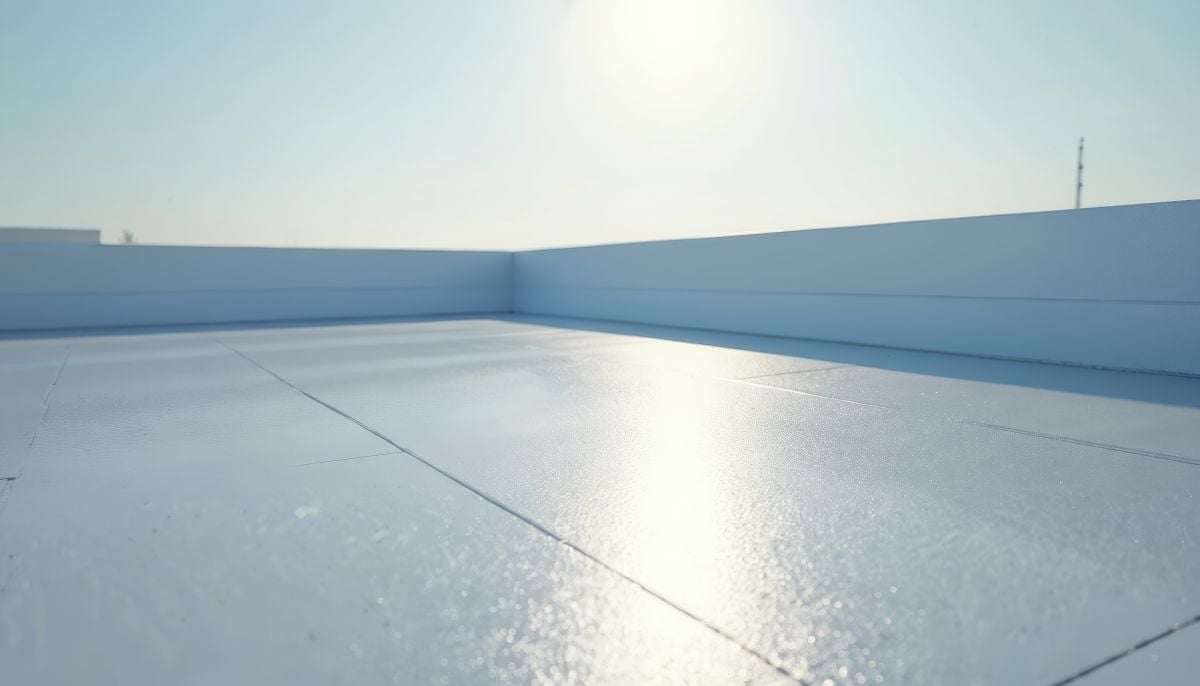
Understanding flat roof cost is one of the first steps when planning a roof replacement or new construction project. Whether you own a commercial building or a home with a low-slope section, flat roofing systems offer durability, efficiency, and modern design flexibility. For property owners in Omaha and surrounding areas, knowing what affects flat roof cost in 2026 helps you budget confidently and choose the right material for long-term value.
- Affordability: Flat roofs are often more cost-effective than steep-slope systems.
- Material Options: Several roofing types offer different price points and lifespans.
- Long-Term Value: Proper installation reduces maintenance and repair expenses.
Average Flat Roof Cost in 2026
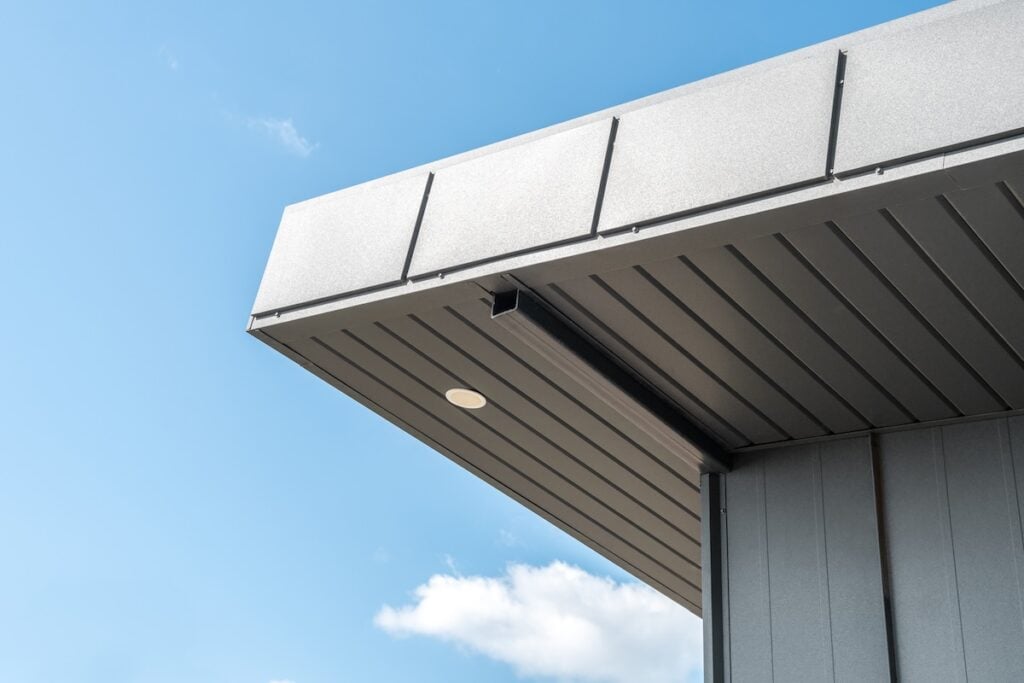
Flat roof cost varies depending on material type, roof size, insulation, and labor requirements. In Nebraska, the average installed price typically ranges between $5 and $12 per square foot for most residential and commercial projects.
Here’s a general breakdown based on property size:
| Roof Size | Estimated Cost Range | Typical Lifespan |
| 1,500 sq. ft. (Residential) | $7,500–$15,000 | 15–30 years |
| 5,000 sq. ft. (Commercial) | $25,000–$50,000 | 20–30 years |
| 10,000 sq. ft. (Commercial) | $50,000–$100,000 | 20–35 years |
These estimates include materials and professional installation but may vary based on insulation upgrades or tear-off requirements.
What Impacts Flat Roof Cost?
Several key factors determine the final price of a flat roof system. Understanding these variables helps both homeowners and commercial property managers plan effectively.
1. Roofing Material Selection
Material choice plays the biggest role in determining flat roof cost. Each option offers different durability levels and price points.
- TPO (Thermoplastic Polyolefin): $6–$9 per sq. ft.; energy-efficient and popular for commercial properties.
- EPDM (Rubber Roofing): $5–$8 per sq. ft.; affordable and durable.
- PVC Roofing: $7–$12 per sq. ft.; highly resistant to chemicals and grease.
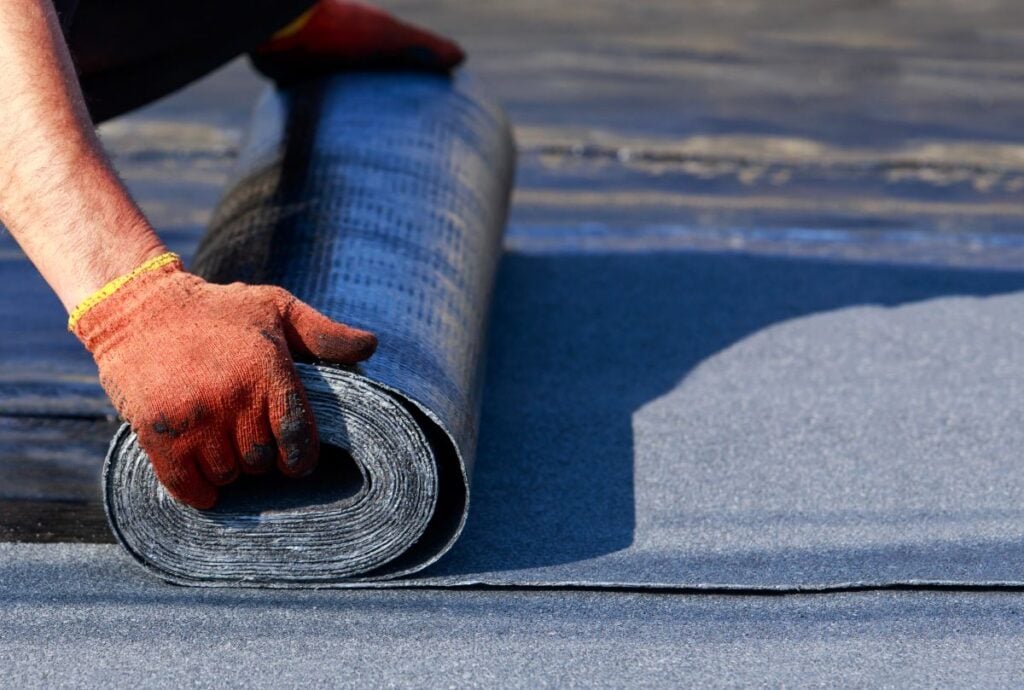
- Built-Up Roof (BUR): $6–$10 per sq. ft.; layered and time-tested system.
- Modified Bitumen: $5–$9 per sq. ft.; flexible and ideal for residential flat sections.
Choosing the right material depends on your building type, budget, and performance expectations.
2. Roof Size and Accessibility
Larger roofs require more materials and labor, increasing total cost. However, the price per square foot may decrease for larger commercial projects due to economies of scale.
Accessibility also matters. Multi-story buildings or those requiring cranes and additional safety equipment may increase labor costs.
3. Tear-Off vs. Overlay
If your existing roof needs removal before installation, that adds to the overall flat roof cost. Tear-off and disposal typically range from $1 to $3 per square foot, depending on the number of layers and material type.
In some cases, installing a new membrane over the existing roof may reduce costs if local building codes allow it.
4. Insulation and Energy Efficiency
Adding or upgrading insulation improves energy efficiency but increases upfront cost. Commercial buildings often require higher R-values to meet energy codes.
- Polyiso Insulation: $1.50–$3 per sq. ft.
- Tapered Insulation Systems: $2–$4 per sq. ft., used to improve drainage and reduce ponding water.
In Omaha and surrounding areas, proper insulation helps reduce heating and cooling costs throughout the year.
5. Drainage and Roof Features
Flat roofs require proper drainage systems to prevent standing water. Additional drains, scuppers, or tapered insulation systems can add to the project budget.
Other rooftop features—like HVAC units, skylights, or solar panels—may increase labor complexity and flashing costs.
Residential vs. Commercial Flat Roof Cost
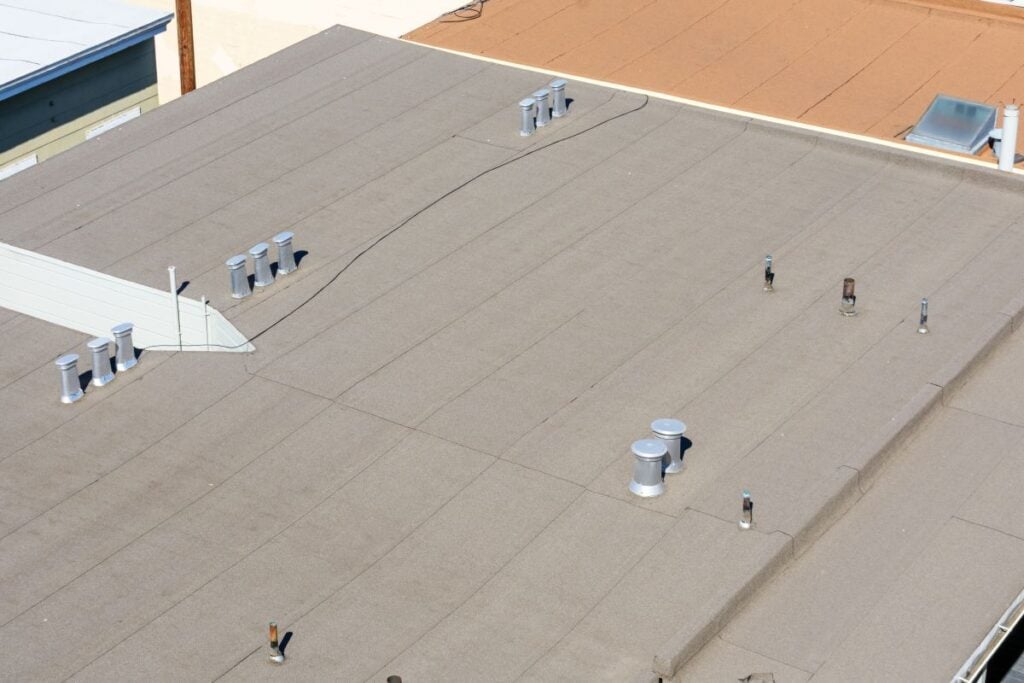
While the installation methods are similar, there are key differences between residential and commercial flat roof projects.
- Residential Flat Roofs: Often smaller and used for porches, garages, or modern home designs. Costs typically range between $7,500 and $15,000 for average-sized sections.
- Commercial Flat Roofs: Larger surfaces require more materials but may benefit from lower per-square-foot labor costs. Projects can range from $25,000 to over $100,000 depending on size and material choice.
Commercial roofs also tend to require thicker insulation and more extensive drainage systems, which can impact overall flat roof cost.
4 Ways to Reduce Flat Roof Cost
If you’re looking to manage expenses without sacrificing quality, consider these cost-saving strategies.
- Choose the Right Material for Your Needs: Avoid overspending on premium materials if your building doesn’t require them. EPDM or modified bitumen may offer sufficient durability at a lower cost.
- Schedule Replacement During Off-Peak Seasons: Roofing demand tends to spike during late spring and summer. Scheduling your project during slower months may result in better pricing and faster scheduling.
- Invest in Proper Maintenance: Routine inspections and minor repairs prevent costly full replacements. Preventive care extends your roof’s lifespan and reduces long-term expenses.
- Bundle Services: If you’re installing solar panels, insulation upgrades, or other exterior improvements, combining services may reduce overall labor costs.
Is a Flat Roof Worth the Investment?
Flat roofs offer numerous advantages for both homeowners and commercial property owners.
- Modern Appearance: Clean lines complement contemporary designs.
- Usable Space: Allows for rooftop HVAC systems, patios, or solar installations.
- Energy Efficiency: Reflective coatings reduce cooling costs.
- Ease of Maintenance: Accessible surface simplifies inspections and repairs.
While flat roof cost may vary, the long-term durability and energy savings often justify the investment.
Maintenance Costs to Expect
Routine maintenance helps protect your investment and prevent unexpected repairs.
- Annual Inspection: $200–$500
- Minor Repairs: $300–$1,000
- Drain Cleaning: $150–$400
Regular maintenance can extend the lifespan of your flat roof by 5–10 years or more.
Plan Smart for Flat Roof Cost in 2026
Understanding flat roof cost allows both homeowners and commercial property owners to plan confidently and choose the best roofing solution for their needs. With multiple materials available and price ranges that fit various budgets, flat roofing remains a reliable and cost-effective choice in 2026.
If you’re considering a flat roof installation or replacement in Omaha and surrounding areas, J-Tech Construction & Solar can help you compare options and select the right system for your property.
Contact J-Tech Construction & Solar today for a free estimate and expert guidance on a flat roof designed to deliver durability, efficiency, and long-term value.