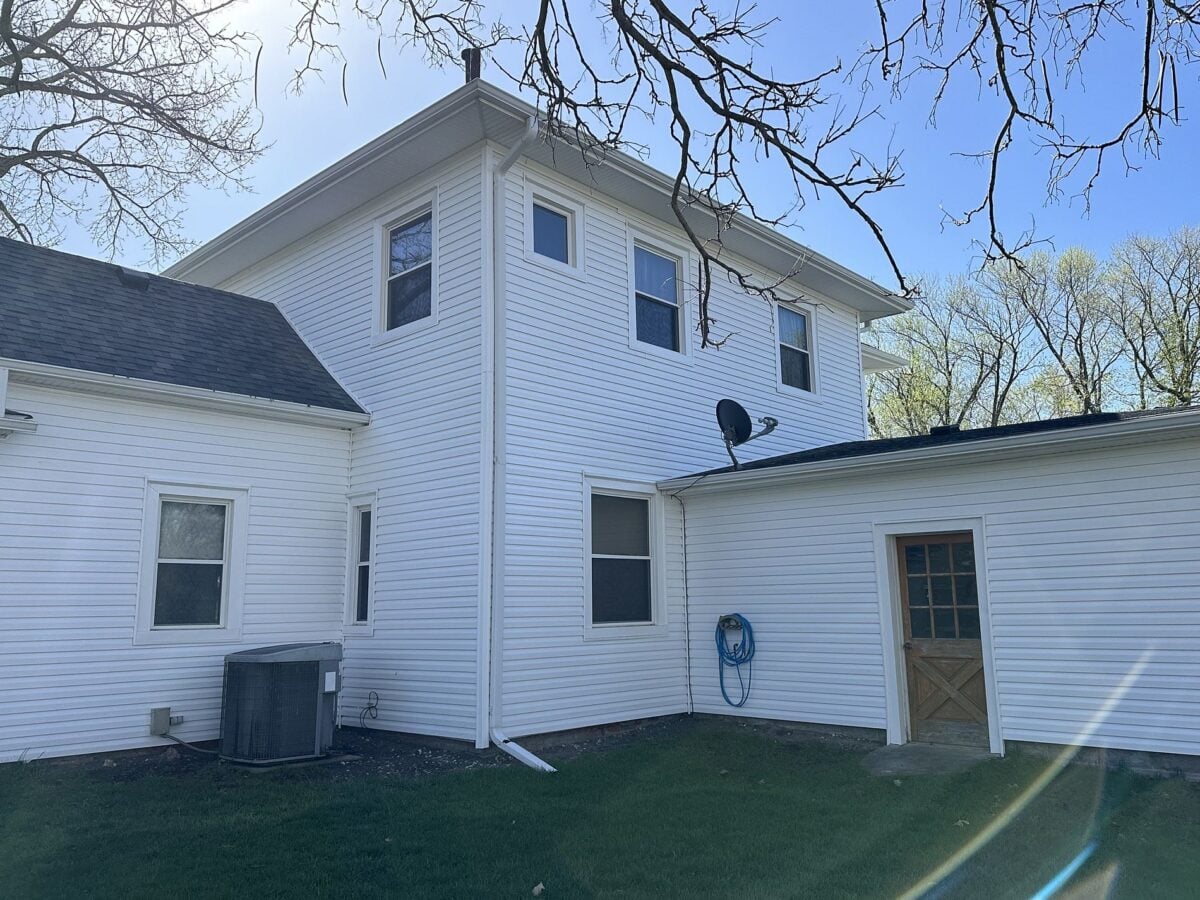
Choosing between fiber cement siding vs vinyl comes down to four real differences that affect how your home looks, performs, and holds value over the next 30 to 50 years. Both materials dominate the residential siding market in Hastings and surrounding areas, both come in dozens of colors and styles, and both can deliver strong curb appeal when installed correctly. The decision lives in cost, durability, fire safety, and long-term value, where the two materials part ways significantly. This guide walks through the four differences that actually move the needle for homeowners, with real specs, real prices, and a clear-eyed look at which choice fits which home.
- Cost reality: Real installed price ranges and what drives the gap between materials.
- Durability and lifespan: How fiber cement and vinyl siding actually perform over decades of weather exposure.
- Fire and resale impact: Fire-rating differences and what each material returns at sale.
What Are Fiber Cement and Vinyl Siding?
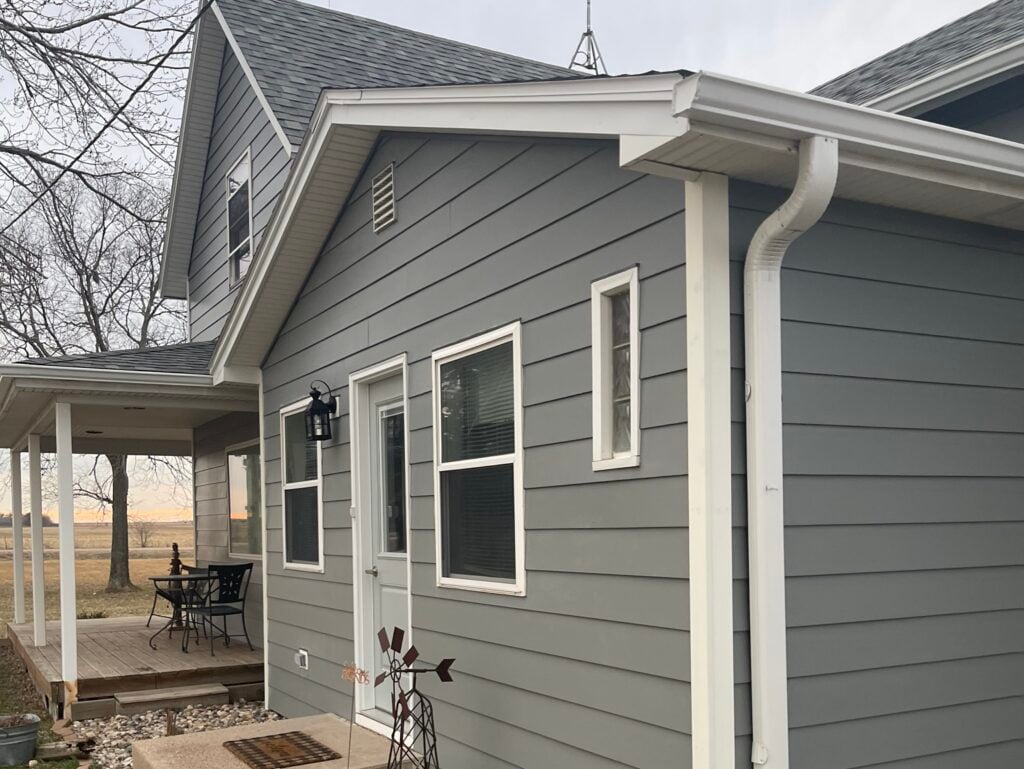
Fiber cement and vinyl siding are the two most popular residential cladding choices in the United States, and they’re built from completely different materials with very different performance characteristics. Understanding the basic composition is the foundation for every cost and durability comparison that follows.
What Is Fiber Cement Siding?
Fiber cement siding is a composite material made from Portland cement, sand, water, and cellulose fibers (wood pulp), pressed into rigid boards and cured under heat and pressure. The resulting product is dense, weighing roughly 300 pounds per 100 square feet and measuring 0.25 to 5/16 inches thick, which is significantly thicker than vinyl. James Hardie is the dominant manufacturer in the category, with LP SmartSide (engineered wood) and Allura serving as primary competitors. Fiber cement holds paint exceptionally well, resists insect damage, and won’t warp or melt at high temperatures. Most premium fiber cement comes with factory-applied finishes like James Hardie’s ColorPlus Technology that carry 15-year fade warranties.
- Composition: Portland cement, sand, water, and cellulose fibers.
- Weight: Approximately 300 pounds per 100 square feet.
- Thickness: 0.25 to 5/16 inches, much denser than vinyl.
- Top brands: James Hardie, LP SmartSide, Allura, Nichiha.
What Is Vinyl Siding?
Vinyl siding is manufactured from polyvinyl chloride (PVC) resin mixed with stabilizers, pigments, and impact modifiers, then extruded into long panels with interlocking edges. The resulting panels are lightweight, weighing only 60 to 70 pounds per 100 square feet and measuring 0.040 to 0.048 inches thick, which makes installation faster and cheaper. Major manufacturers include CertainTeed, Mastic, Royal, and Alside, with premium product lines like Mastic’s Ovation and CertainTeed’s Cedar Impressions offering thicker panels and more realistic textures. Vinyl is virtually maintenance-free, requiring only periodic rinsing with a garden hose. The major drawbacks are limited fire resistance, vulnerability to high-heat warping, and a less premium appearance up close.
- Composition: Polyvinyl chloride (PVC) resin with stabilizers and pigments.
- Weight: 60 to 70 pounds per 100 square feet.
- Thickness: 0.040 to 0.048 inches, much thinner than fiber cement.
- Top brands: CertainTeed, Mastic, Royal, Alside.
4 Differences That Actually Matter
Most siding comparisons drown homeowners in a dozen factors that don’t really move the decision. The four below are the ones that matter because they shape cost, performance, and long-term value across the full lifespan of your home.
1. Installed Cost (The Single Biggest Gap)
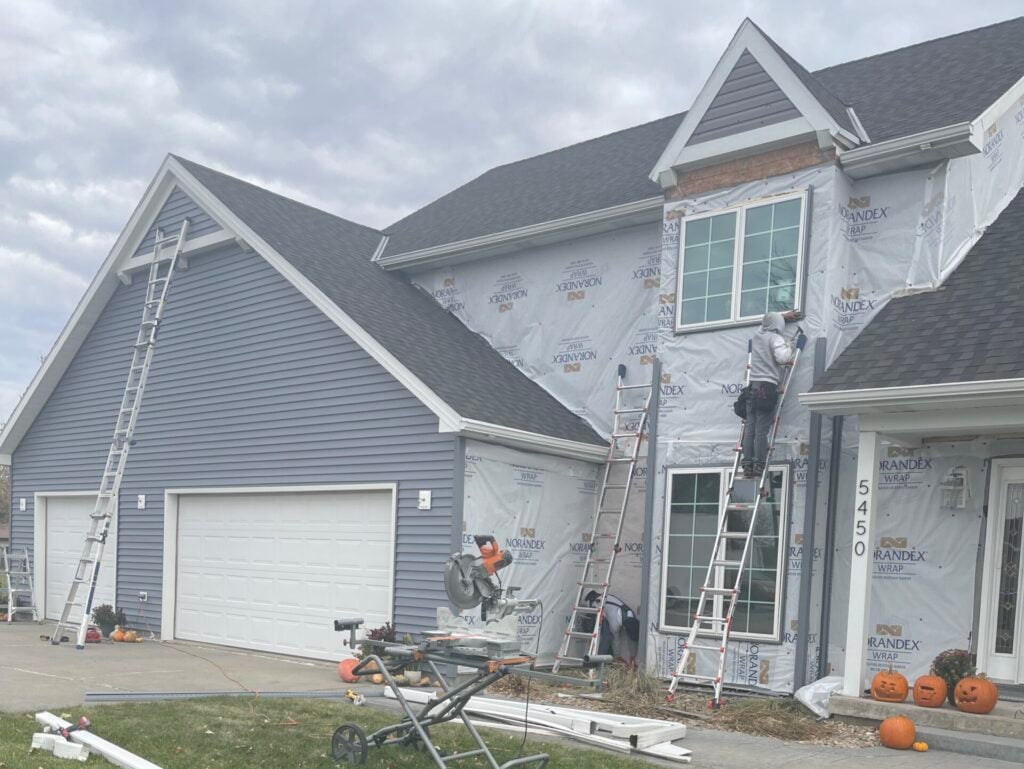
Vinyl siding costs $4 to $8 per square foot installed, while fiber cement runs $4.70 to $14 per square foot installed, putting the per-square-foot premium for fiber cement at roughly 50% to 100% over vinyl. On a typical 2,000-square-foot home, that translates to a project cost of $8,000 to $16,000 for vinyl versus $9,400 to $28,000 for fiber cement. The gap exists because fiber cement materials cost more, the boards weigh roughly four times as much as vinyl, and installation requires specialized cutting tools, more labor, and more careful fastening. James Hardie installations specifically require certified contractors trained on the brand’s nailing, joint-spacing, and moisture-barrier specifications, since improper installation voids the warranty. For homeowners on a tight budget or planning to sell within 10 years, the cost gap can be a deciding factor.
- Vinyl installed cost: $4 to $8 per square foot.
- Fiber cement installed cost: $4.70 to $14 per square foot.
- Whole-house difference: $1,400 to $12,000 on a 2,000-square-foot home.
- Cost drivers: Material weight, specialized tools, certified installers required.
2. Durability and Lifespan
Fiber cement siding lasts 30 to 50 years or more, while vinyl siding typically lasts 20 to 40 years, putting fiber cement clearly ahead on long-term durability. Fiber cement resists cracking, warping, rotting, and pest damage in ways vinyl cannot match, particularly in climates with extreme temperature swings. Vinyl can warp under sustained heat, crack in extreme cold, and fade noticeably after 15 to 20 years of UV exposure, even with modern color-stabilized formulations. Fiber cement boards withstand high winds, hail, and impact damage far better, often rated for winds up to 150 mph compared to 110 mph for premium vinyl. James Hardie backs its fiber cement with a 30-year non-prorated, transferable warranty, while most vinyl carries lifetime limited warranties that typically prorate after the first 10 to 15 years.
- Fiber cement lifespan: 30 to 50+ years with proper maintenance.
- Vinyl lifespan: 20 to 40 years before noticeable degradation.
- Wind resistance: Fiber cement up to 150 mph; premium vinyl up to 110 mph.
- Warranty depth: 30-year transferable on Hardie; prorated lifetime on vinyl.
3. Fire Safety (Class A vs. Combustible)
Fiber cement carries a Class A fire rating, meaning it does not ignite when exposed to direct flame and does not contribute fuel to a fire. According to James Hardie, Hardie fiber cement siding will not ignite when exposed to a direct flame, in stark contrast to vinyl which melts almost instantly under heat exposure. Vinyl siding is combustible by nature because PVC resin softens around 165°F and melts well below the temperatures common in even moderate house fires. For homeowners in wildfire-prone regions or with detached structures close to the property, the fire-rating difference is genuinely significant. Some homeowners insurance carriers offer discounts for Class A fire-rated exterior cladding, which can offset part of the upfront cost gap. Even in lower-risk areas, the slower flame spread can buy critical minutes for a home and family.
- Fiber cement rating: Class A fire rating; non-combustible per ASTM E84.
- Vinyl behavior: Combustible; softens around 165°F and melts in fires.
- Insurance discounts: Some carriers reduce premiums for Class A cladding.
- Best for high-risk areas: Wildfire zones, rural properties, detached structures.
4. Resale Value and ROI
Both siding materials add significant resale value, but fiber cement consistently delivers the stronger return on investment in industry studies. Remodeling Magazine’s Cost vs. Value Report has tracked fiber cement and vinyl siding replacement for years, with fiber cement typically recouping 60% to 88% of project cost at resale and vinyl recouping 60% to 80%. The gap reflects buyer perception of fiber cement as a premium, longer-lasting material that doesn’t need to be replaced before they sell again. Real estate agents in Hastings and surrounding areas often note that homes with newer fiber cement siding move faster than comparable homes with aging vinyl. The trade-off is the higher upfront cost, which homeowners only fully recover if they stay in the home long enough to enjoy the lower maintenance and longer lifespan, or if the local market specifically rewards the upgrade.
- Fiber cement ROI: 60% to 88% cost recovery at resale.
- Vinyl ROI: 60% to 80% cost recovery at resale.
- Buyer perception: Fiber cement viewed as premium, longer-lasting material.
- Time-on-market: Newer fiber cement homes often sell faster than aging vinyl.
Which Siding Is Right for Your Home?
Both materials work well in the right circumstances, and the smartest choice depends on your budget, how long you plan to stay, and the climate exposure your home faces.
When Does Vinyl Siding Make More Sense?
Vinyl siding makes more sense when budget is the primary driver, when you plan to sell within 10 to 15 years, or when you’re updating a starter home or rental property. Premium vinyl product lines from Mastic and CertainTeed offer thicker panels, deeper textures, and color-stabilized finishes that hold up better than budget vinyl. Modern vinyl looks far more convincing than the thin, shiny vinyl of 20 years ago, and from the curb most homeowners and buyers can’t tell the difference. If you live in a moderate climate without extreme heat, wildfire risk, or hurricane-force winds, vinyl performs perfectly well. The maintenance advantage is also genuine, since vinyl requires only periodic rinsing and never needs repainting.
- Best for: Tighter budgets, shorter ownership horizons, starter homes.
- Climate fit: Moderate temperatures, low wildfire risk, average wind exposure.
- Maintenance: Virtually none beyond periodic rinsing.
- Premium options: Mastic Ovation, CertainTeed Cedar Impressions for upgraded look.
When Does Fiber Cement Siding Make More Sense?
Fiber cement siding makes more sense when you’re investing in a forever home, when fire risk is elevated, when you want maximum curb appeal, or when long-term maintenance economics matter to you. The material handles temperature swings, heavy wind, hail, and pest pressure better than vinyl across nearly every scenario. Fiber cement also accepts deeper embossing and more realistic wood-grain textures, which gives the home a more premium, custom appearance. James Hardie’s HardieZone system formulates products specifically for regional climates, including HZ5 for the Midwest’s freeze-thaw cycles and humidity. For homeowners planning to stay 15 or more years, the longer lifespan and lower replacement frequency typically justify the higher upfront cost.
- Best for: Long-term ownership, forever homes, premium curb appeal.
- Climate fit: Freeze-thaw cycles, high heat, wildfire risk, severe weather.
- Aesthetic edge: Deeper texture, more realistic wood grain.
- Climate-zoned products: James Hardie HardieZone matches material to region.
Frequently Asked Questions
How much does fiber cement siding cost compared to vinyl?
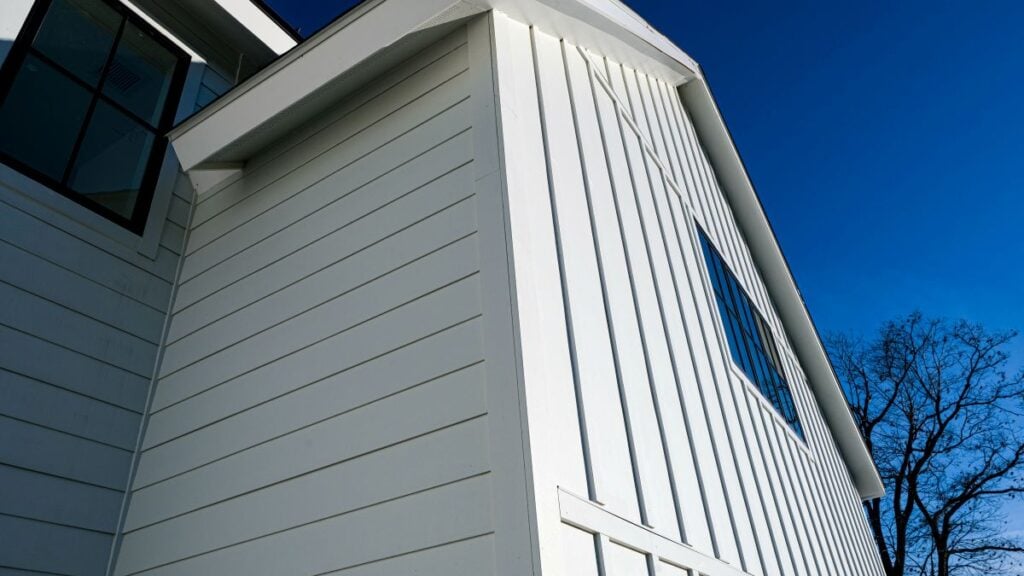
Fiber cement siding typically costs 50% to 100% more than vinyl siding installed, with fiber cement running $4.70 to $14 per square foot and vinyl running $4 to $8 per square foot. On a 2,000-square-foot home, that’s a difference of roughly $1,400 to $12,000 depending on product tier and labor rates. Premium vinyl narrows the gap somewhat but rarely matches the fiber cement upper tier on price.
Does fiber cement siding need to be painted?
Factory-finished fiber cement like James Hardie’s ColorPlus Technology comes pre-painted at the factory and carries a 15-year fade warranty, so no additional painting is required for at least that long. Primed-only fiber cement boards need to be painted after installation and repainted every 10 to 15 years thereafter. Vinyl never needs painting because the color is integral to the material.
Which siding is more energy efficient?
Vinyl siding has a slightly higher R-value than standard fiber cement (R-0.6 versus R-0.5), and foam-backed vinyl can reach R-1.8 or higher. Both materials benefit significantly from rigid foam insulation installed underneath, which usually delivers more energy improvement than the siding choice itself. Energy efficiency differences between properly installed fiber cement and vinyl are typically minor in real-world performance.
How long does siding installation take?
A typical 2,000-square-foot home takes 5 to 10 days to re-side with vinyl and 7 to 14 days with fiber cement. Fiber cement requires more time because the boards are heavier, require carbide-tipped cutting blades, and demand precise nailing patterns. Weather, the condition of the underlying sheathing, and the complexity of trim details all affect the timeline.
Can I install siding myself?
Vinyl siding is feasible for experienced DIY homeowners on simple ranch-style homes, though manufacturer warranties often require professional installation. Fiber cement is not recommended for DIY because the boards are heavy, require specialized cutting tools, and demand precise nailing depth and joint spacing to maintain the warranty. James Hardie specifically requires certified Preferred Contractors for full warranty coverage.
Which siding has better fire resistance?
Fiber cement has dramatically better fire resistance than vinyl. Fiber cement carries a Class A fire rating and does not ignite when exposed to flame, while vinyl is combustible and melts at relatively low temperatures. For homeowners in wildfire-prone areas or properties near other structures, fiber cement is the clearly safer choice.
Why Choose J-Tech Construction & Solar for Your Siding Replacement?
J-Tech Construction & Solar is the trusted name for siding replacement in Hastings and surrounding areas because of more than 20 years of installation experience, a family-owned and locally operated team, and deep certification across both James Hardie fiber cement and the leading vinyl siding brands. Every siding installation includes a free in-home consultation, transparent written quotes that compare materials side by side, quick turnaround times, financing options that fit any budget, and warranties that protect your investment for decades.
Whether you’re drawn to the long-term durability and fire safety of fiber cement or the budget-friendly performance of premium vinyl, the J-Tech team helps you choose the material that fits your home, your goals, and your timeline. Contact J-Tech Construction & Solar today to schedule your free siding estimate and find out which material delivers the right balance of cost, performance, and curb appeal for your home.